


What Science Reveals: How Reading Benefits and Shapes the Mind

For centuries, reading has been cherished as a source of wisdom, imagination, and comfort. In recent decades, science has begun to explain why reading feels so powerful. Across neuroscience, psychology, and education, research consistently shows that reading has a measurable and lasting impact on the human mind—strengthening how we think, feel, and process the world.
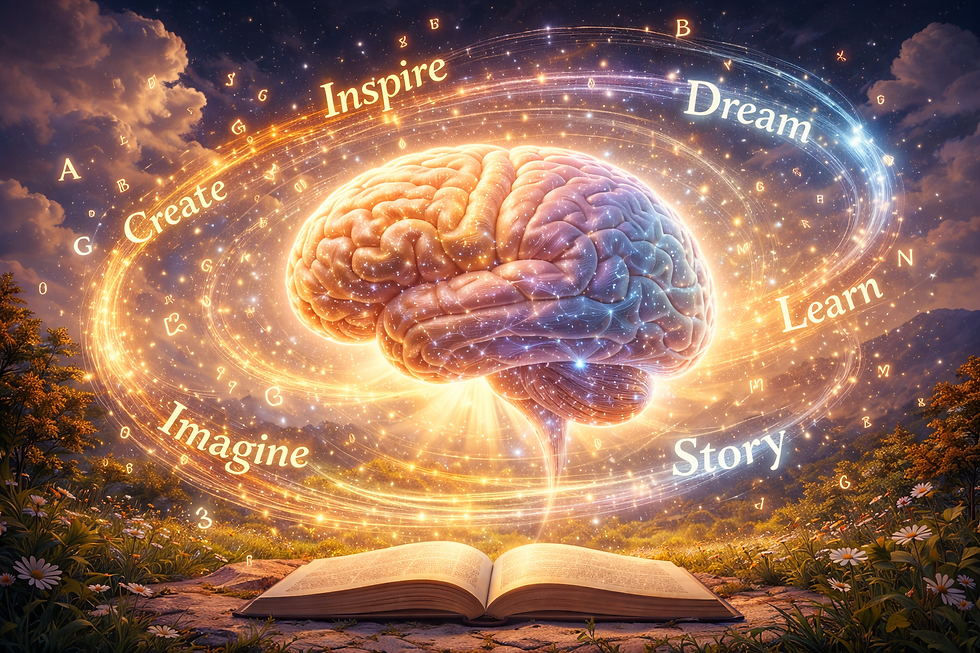
Reading Builds and Strengthens the Brain
Scientific studies using brain imaging have shown that reading activates multiple areas of the brain at once. When we read, the brain is not passively receiving information—it is actively working. Regions responsible for language, memory, sensory processing, and imagination all light up together.
Regular reading has been linked to stronger neural connections, especially in areas tied to comprehension and critical thinking. Over time, this mental exercise helps maintain cognitive sharpness and supports long-term brain health. Researchers often compare reading to a workout for the brain: the more consistently it’s practiced, the stronger and more resilient the mind becomes.
Improved Focus and Attention
One of the most well-documented benefits of reading is improved concentration. Unlike digital media, which often fragments attention, reading requires sustained focus. Studies show that regular readers develop a greater ability to concentrate for longer periods of time.
This improved attention doesn’t stay on the page—it carries into everyday life. People who read frequently tend to process information more deeply, stay mentally engaged longer, and experience less mental fatigue when performing complex tasks.
Stress Reduction and Mental Calm
Scientific research has found that reading can significantly reduce stress levels. Even a short period of quiet reading has been shown to lower heart rate, relax muscles, and decrease cortisol—the body’s primary stress hormone.
This calming effect is especially important for mental health. Reading provides a form of mental escape that allows the brain to rest while remaining engaged. Unlike passive distractions, reading gently redirects the mind, offering relief from anxiety without overstimulation.
Emotional Intelligence and Empathy
Studies in psychology have found a strong link between reading—particularly narrative fiction—and increased empathy. When readers follow characters through challenges, emotions, and decisions, the brain practices understanding perspectives beyond its own.
This repeated mental exercise strengthens emotional intelligence. Readers become better at recognizing emotions, interpreting social cues, and responding with compassion. In both children and adults, this leads to improved relationships and emotional regulation.
Memory, Vocabulary, and Lifelong Learning
Reading has long been associated with improved memory and language skills, and research continues to support this. Exposure to new words, sentence structures, and ideas strengthens vocabulary and comprehension, while also enhancing memory retention.
For children, this supports academic development and cognitive growth. For adults, it helps maintain mental agility and supports lifelong learning. Studies also suggest that regular reading may slow cognitive decline later in life by keeping the brain actively engaged.
Reading as a Mental Habit That Shapes Thought
Perhaps one of the most profound findings from scientific research is that reading doesn’t just change what we know—it changes how we think. Over time, reading influences inner dialogue, reasoning patterns, and emotional responses.
The brain adapts to what it repeatedly practices. When we regularly engage with thoughtful, meaningful reading, we train the mind toward reflection, patience, and deeper understanding.
The Quiet Power of a Proven Practice
Science confirms what readers have always felt: reading is deeply beneficial to the mind. It strengthens the brain, calms the nervous system, improves emotional understanding, and supports mental well-being at every stage of life.
In a fast-paced, high-stimulation world, reading remains one of the most effective—and accessible—ways to care for the mind. One book, one chapter, even one quiet page at a time can shape how we think, feel, and grow.
Sometimes the most powerful changes in the mind don’t come from doing more—but from slowing down long enough to read.
Comments